Can You Truly "Reproduce" That Verification?
When using TradingView's replay feature for backtesting, many people think:
"I'm hiding the right side, so I can't see the future."
"This is basically the same as a real backtest, right?"
The conclusion: It's an illusion. The moment you start the replay, your brain has already processed the "future context."
If You Replay 100 Times, Do You Get the Exact Same Result 100 Times?
First, ask yourself this:
- Same date
- Same currency pair
- Same rules
- Same timeframe
If you do it 100 times, do you end up with 100 identical trade histories?
Most people answer, "Mostly the same." But that is not reproducibility.
Why You "Know the Future" Just by Using Replay
You Can Hide the Chart, but You Can't Hide the Context
Look at the two images below.
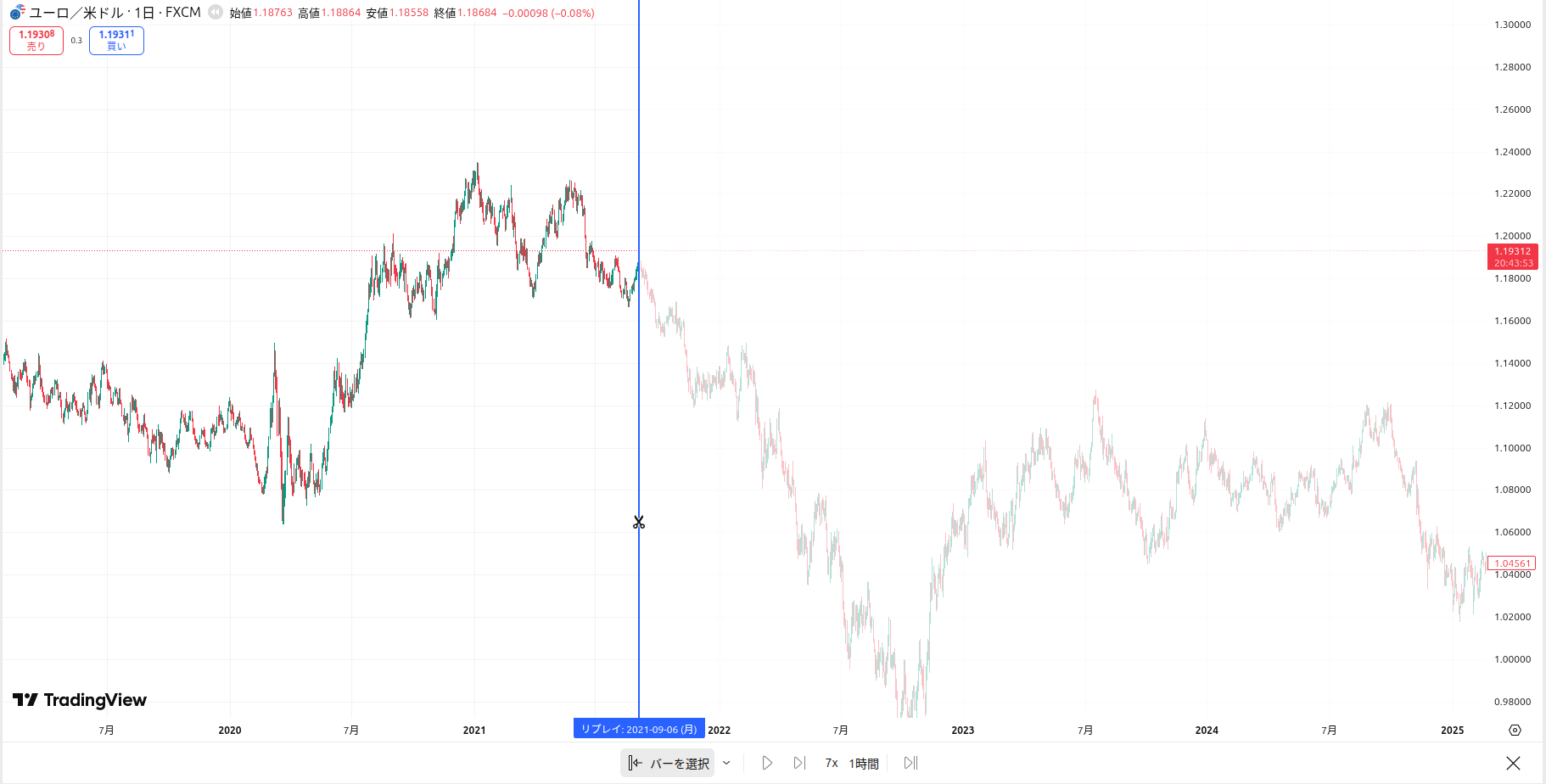
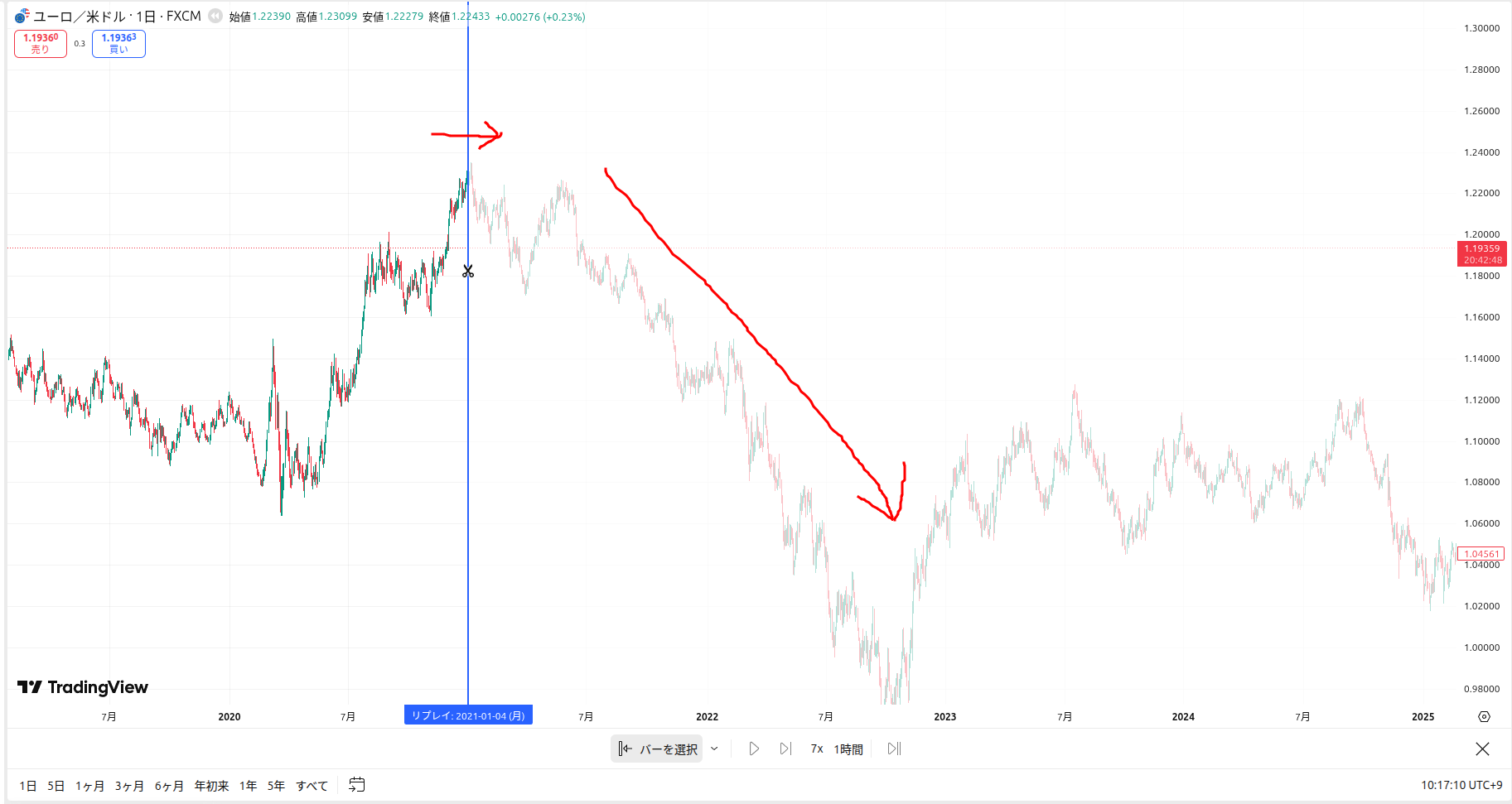
In both cases, the right side is hidden during the replay. However, you are verifying while already knowing the macro trend.
- You know it went up from here.
- You know it dropped sharply after this.
- You know it ended up being a range.
When humans know this "context," they subconsciously start searching for the "correct" reasons to justify a decision.
This is the greatest trap of replay verification.
"If you want to eliminate the human element—the greatest uncertainty—and keep a 'mechanical log' without a single millimeter of error, check out the details of [Delver: The Discretionary Trading Verification Tool]."
Is Your Entry Based on "Strategy" or "Brain Cheating"?
In replay verification, this happens:
- A Winning Trade: "I knew I should have entered here."
- A Losing Trade: "I could have decided to skip this one."
Both are hindsight bias.
In real-time trading where you don't know the future, this "convenient correction" is impossible to use.
The "Replay Entry vs. Real Execution" Gap
Take a look at the next image.
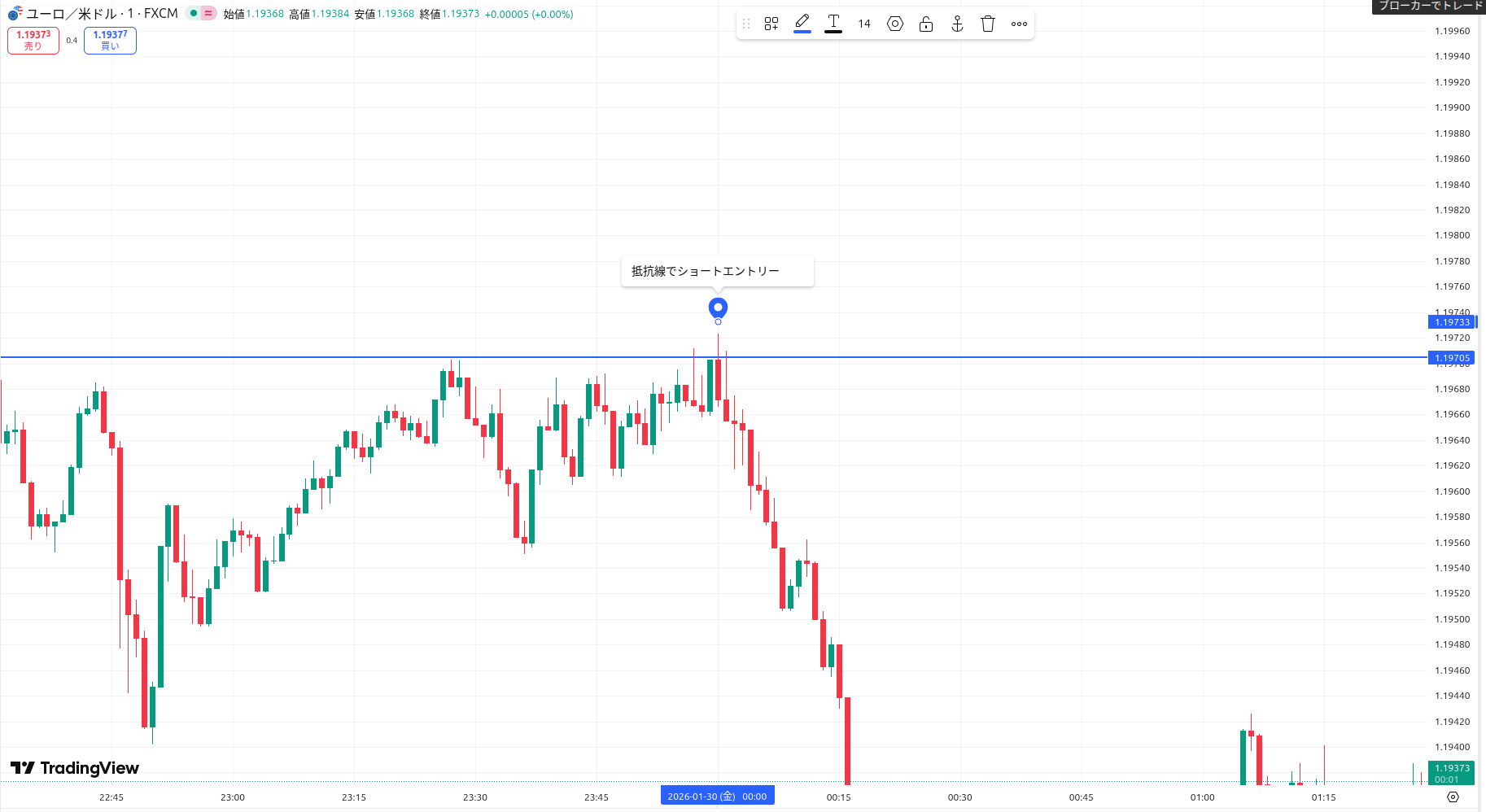
While the entry works perfectly on the replay, in actual trading, a difference of just 0.2 pips in spread or commission would lead to a non-execution.
- Replay: Ideal prices.
- Live Trading: Real-world prices.
This gap is almost always ignored in discretionary verification. Consequently, you face the mysterious phenomenon:
"I can win in verification, but I can't get my orders filled in the real market."
Structural Reasons Why TradingView Replay Isn't "Verification"
The problem isn't how you use it. It's the structure.
- No tick-by-tick reproducibility.
- Execution conditions don't match reality.
- No decision logs are kept.
- Data on "hesitation" or "skipping a trade" disappears.
In short, the information necessary for true verification is not recorded.
Manual Verification Always Ends Like This
Look at these images.
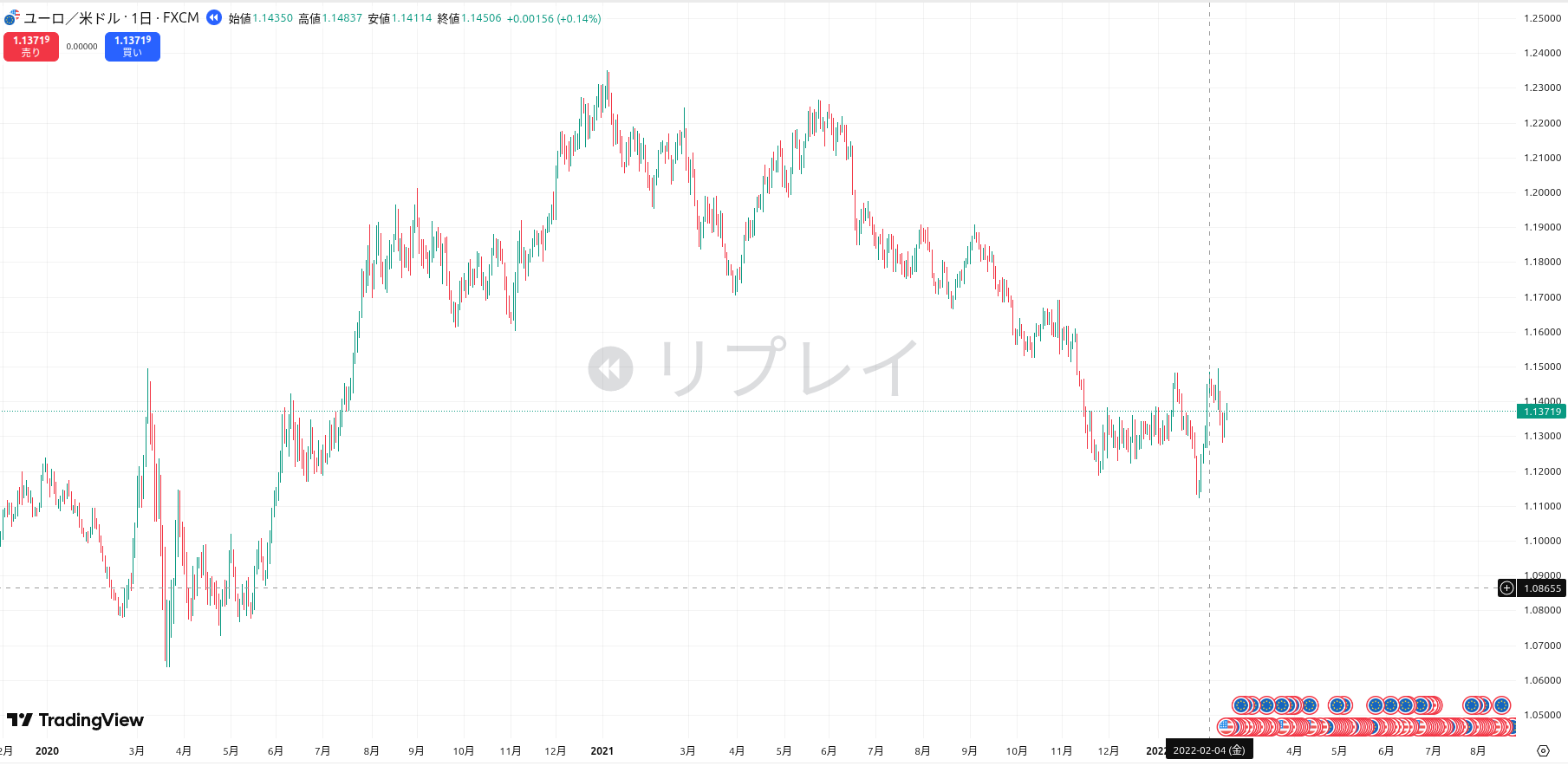
This clean chart eventually becomes...
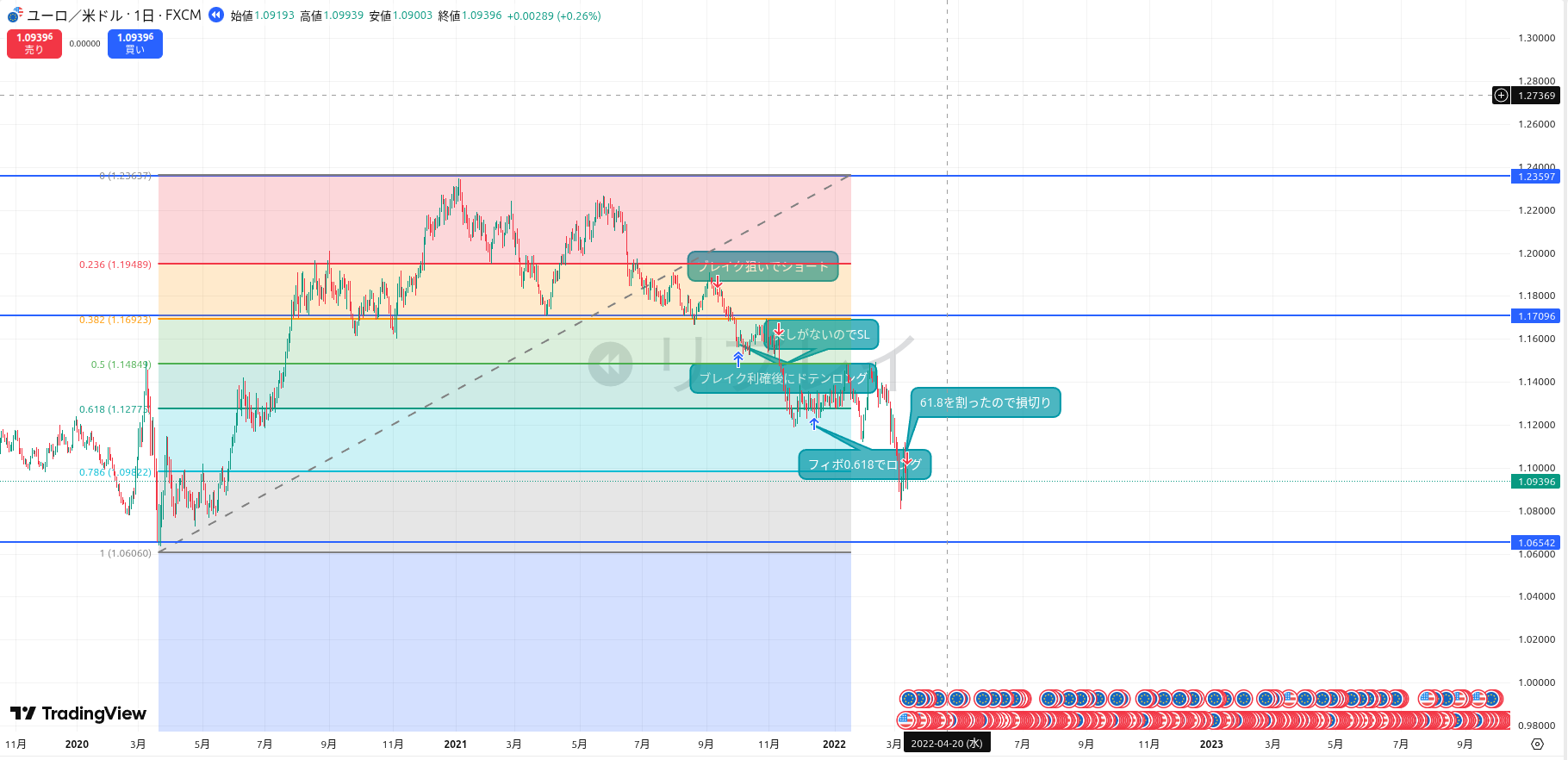
If you keep entering trades manually:
- Notes pile up.
- Lines multiply.
- Annotations clutter the screen.
And you won't look back at them anyway. Even if you did, you wouldn't be able to accurately explain:
- Under what exact conditions?
- Why did I enter?
- Why did I exit?
For a guide on how to correctly interpret backtest results, see this article:
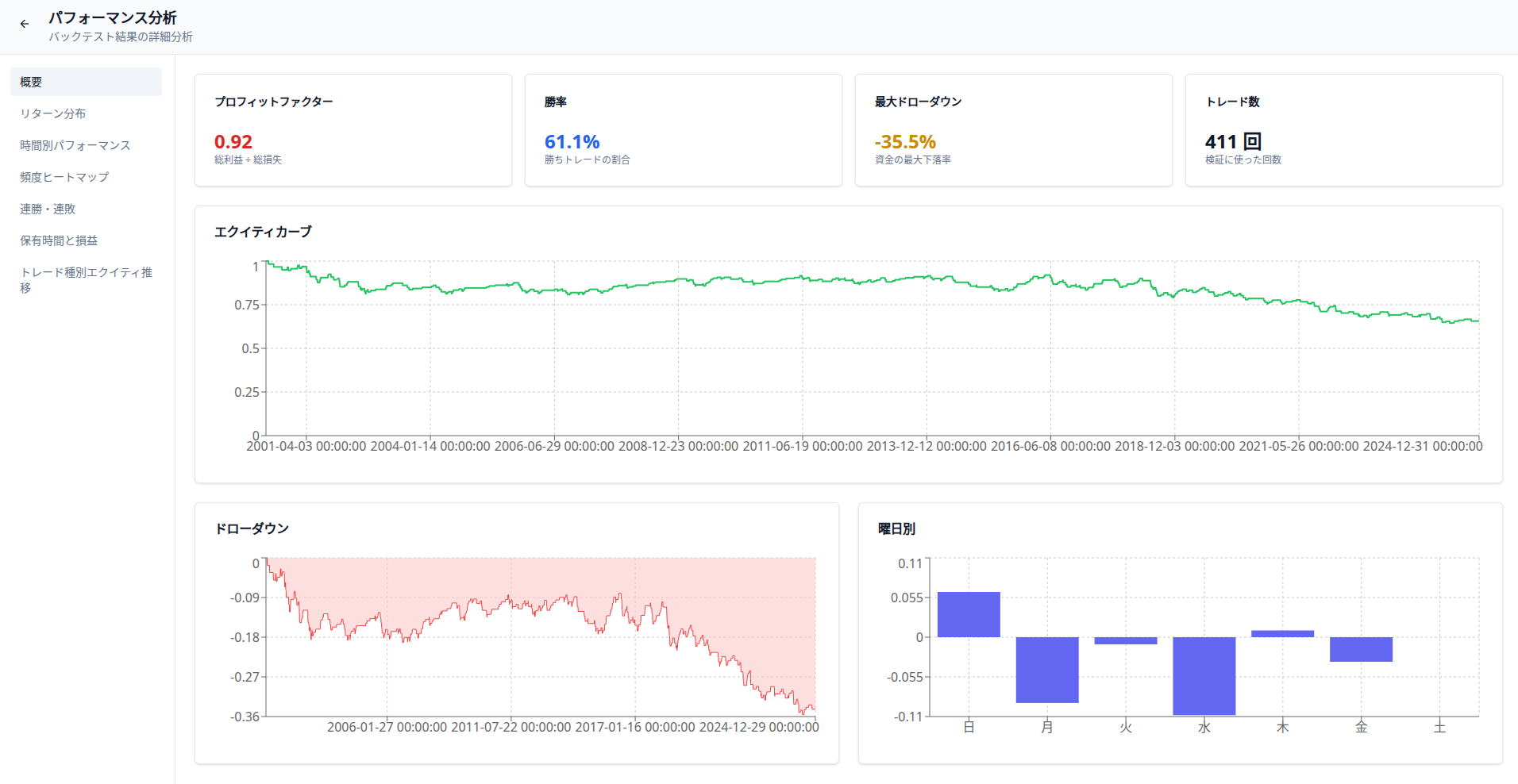
If You Can't Log "Decision Variance," It's Not Verification
The most important part of true verification isn't the final result.
- Why did I hesitate?
- Why did I pass?
- Why did I enter this time?
It's about whether you have eliminated or standardized this human variance. TradingView Replay completely skips this most critical part.
The Correct Way to Use TradingView Replay
Don't misunderstand: TradingView Replay itself is not bad.
- Training your market sense.
- Practicing pattern recognition.
- Chart reading exercises.
It is excellent for these purposes. However, believing in it as statistical data is financial suicide.
Summary | Replay is a Device for "Feeling" Like You've Verified
TradingView's replay feature is:
- Easy to use.
- Simple to understand.
- Satisfying.
That's exactly why it's dangerous. Is that verification result:
The power of your strategy?
Or your brain cheating because it knows the future?
If you can't answer this immediately, you shouldn't trust those results.
TradingView is a top-tier "training ground," but it is not a "testing ground" for establishing a winning strategy. Why not settle once and for all whether your strategy has a true edge with the cold, hard data from Delver?
"If you want to carefully choose the best verification tool for your style, check out this comparison article."
